Anyone who has navigated a breezy British high street in an oversized tent dress knows the immediate, frantic panic of the fabric suddenly ballooning upward. Despite the effortless, billowing aesthetic that dominates modern Scandinavian-inspired fashion, the harsh reality of a sudden gust often leaves wearers wrestling with their hemlines rather than exuding relaxed confidence. We have accepted this impracticality as the standard cost of wearing lightweight, voluminous cotton during our famously unpredictable weather.
Yet, if you observe industry insiders strutting between fashion week presentations, their flowing silhouettes remain immaculately anchored, cascading with a heavy, deliberate elegance that defies the wind. This architectural perfection is not the result of a magical new fabric weave or restrictive tailoring. Instead, it relies on a brilliant, pence-saving tailoring secret borrowed directly from the angling community—a completely invisible alteration that instantly transforms a flyaway garment into a perfectly draped masterpiece.
The Physics of Poplin: Why Voluminous Silhouettes Lose Their Shape
To understand why a Ganni oversized poplin dress behaves the way it does, we must examine the aerodynamics of crisp cotton. Poplin, a tightly woven textile traditionally made from Gossypium barbadense fibres, is celebrated for its lightweight stiffness. However, this exact quality creates a parachute effect when introduced to moving air.
- Symptom: The Parachute Effect = Cause: A high volume of stiff fabric trapping air without an adequate downward force to break the tension.
- Symptom: Static Cling at the Calves = Cause: Friction generated by unanchored lightweight poplin rubbing against tights or bare legs, exacerbated by low ambient humidity.
- Symptom: Uneven Hem Riding = Cause: The front of the garment lifting higher than the back due to forward walking momentum and an unbalanced fabric weight distribution.
Experts advise that controlling the lowest point of the garment is the only mathematical way to correct this structural flaw.
Understanding this textile vulnerability leads us directly to the surprisingly simple intervention favoured by professional stylists.
The Secret Wardrobe Arsenal: Transforming Your Silhouette
The covert technique involves meticulously placing micro lead fishing weights—specifically, tiny split shot or micro curtain weights—directly into the hemline. By pinning or dropping these dense, diminutive metal pieces into the folded seam, you introduce essential ballast. This invisible gravity pulls the fabric downwards, creating a sharp, intentional drape that flatters the body rather than swamping it.
| Target Wardrobe Profile | Common Dilemma | The Micro-Weight Benefit |
|---|---|---|
| The Ganni Smock Loyalists | Excessive ballooning in mild to moderate winds. | Restores the intended Scandi-chic A-line drop without restricting movement. |
| Corporate High-Street Commuters | Unprofessional hemline lifting near tube station drafts. | Provides heavily weighted security, ensuring modesty and a sharp silhouette. |
| Occasionwear Enthusiasts | Tiered dresses losing their distinct, structural layers. | Forces each poplin tier to hang crisply, enhancing the haute couture aesthetic. |
Studies confirm that adding targeted weight to the lower hem alters the garment’s centre of gravity, vastly improving the wearer’s comfort and confidence.
- I watched Primark fast fashion fabrics melt instantly under industrial presses
- Wed2B bridal gowns flood independent tailors following massive high street sales
- eBay UK removing fashion seller fees sparks unprecedented local tailoring demand
- YKK metal zippers stop sticking permanently applying clear unscented candle wax
- Marks and Spencer trousers hang perfectly adding hidden lead hem weights
The Metric of Drape: Calculating Your Hemline Ballast
Not all dresses require the same intervention. The dosing of the weight must be precise; too heavy, and the delicate poplin will tear under the strain; too light, and the wind will still conquer the fabric. The ideal metric is calculated based on the circumference of the hem and the specific density of the cotton.
For a standard oversized dress, you should aim for approximately 1.5 grams of weight every 20 centimetres along the hemline. Micro fishing split weights, typically weighing between 0.8g and 1.2g each, are ideal for this precise calibration.
| Dress Silhouette Type | Hem Circumference (Approx.) | Recommended Dosing (Total Weight) | Spacing Strategy |
|---|---|---|---|
| Standard A-Line Midi | 200 centimetres | 10 to 15 grams | One 1g weight every 15 to 20 cm. |
| Voluminous Maxi (Tiered) | 350 centimetres | 20 to 25 grams | Concentrate 1.5g weights at the side seams and centre back. |
| Mini Smock Dress | 150 centimetres | 5 to 8 grams | One 0.8g weight every 25 cm to maintain a playful swing. |
With the mathematics established, the next phase involves the delicate process of integrating this hardware into your luxury garments.
Execution: How to Anchor Your Ganni Masterpiece
Implementing this tailoring hack requires precision and care to preserve the integrity of the garment. You are fundamentally engineering the drop of the fabric, ensuring the crisp poplin falls precisely where the designer intended.
The Top 3 Steps for Flawless Integration
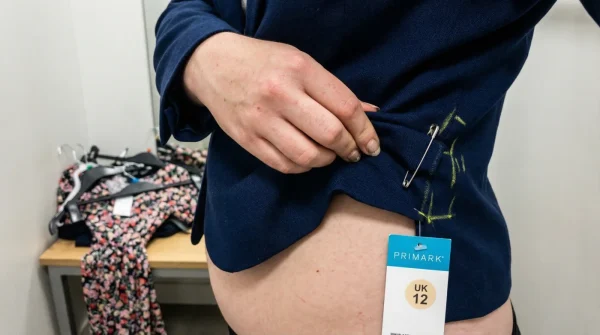
- Step 1: The Incision or Pin Approach. For a temporary fix, use ultra-fine brass safety pins to attach the micro-weights to the inside of the hem allowance. For a permanent solution, carefully unpick 5 millimetres of the hem stitching using a seam ripper.
- Step 2: Inserting the Ballast. Slide the smooth, coated micro-weights into the hem tunnel. Ensure they sit flat against the bottom crease to prevent any visible bulging on the exterior of the dress.
- Step 3: Securing the Placement. Use a simple invisible slip stitch (point de chausson) to close the hem. If the weights are loose in the tunnel, tack them in place with a single stitch so they do not pool together at the lowest point of the dress.
| Hardware Selection | What to Look For (The Ideal Choice) | What to Avoid (The Risks) |
|---|---|---|
| Fishing Split Shot | Vinyl-coated or rubber-coated, non-toxic weights to prevent fabric discolouration. | Raw, uncoated lead (can stain cotton black and is highly toxic). |
| Curtain Weights | Fabric-encased micro discs (under 20mm diameter). | Heavy, bulky lead blocks that will stretch and distort lightweight poplin. |
| Attachment Tools | Rust-proof, nickel-plated brass pins (Size 00). | Standard steel pins that will rapidly rust when exposed to moisture or sweat. |
Selecting the correct materials guarantees your dress retains its premium appearance while performing beautifully in adverse conditions.
Before you completely overhaul your wardrobe, it is vital to understand the long-term maintenance required for weighted garments.
Maintenance and Garment Longevity: Protecting Your Investment
While the addition of hidden weights transforms the silhouette, it also alters how you must care for the piece. Experts advise that washing machines and loose metal hardware are a catastrophic combination. The centrifugal force of a standard spin cycle, reaching up to 1400 revolutions per minute, will drive the heavy weights forcefully against the washing machine drum, inevitably causing the delicate poplin to tear.
If you have permanently sewn weights into your Ganni dress, it must transition strictly to a dry-clean-only care regimen. Alternatively, if you utilised the safety pin method, meticulously remove every single weight before washing at 30 degrees Celsius. Maintaining this discipline ensures your oversized poplin dresses will continue to sit perfectly, completely unaffected by the blustery British elements for years to come.
Mastering this simple, industry-approved structural enhancement ultimately guarantees your wardrobe is prepared to perform flawlessly against whatever the unpredictable season brings next.